Every reader has been there. You pick up a sequel you've been waiting months for, crack it open, and realize you remember almost nothing from the last book. The names are fuzzy. The plot is a blur. You know something important happened, but the details are gone.
So you do what anyone would do. You Google it.
And that's where it all falls apart.
The spoiler trap
Google autocomplete doesn't care where you are in a series. You type in a character's name and it suggests "why did [character] die in book 4." Wiki pages spoil major plot points in the first paragraph. AI chatbots confidently make things up. One Reddit user said they asked an AI for a chapter recap and it invented a character that sounded plausible enough to believe.
Amazon tried to fix this with Kindle AI Recaps in 2025. Auto-generated summaries for book series. Sounded perfect until the recaps started getting things wrong. Amazon had to pull an AI-generated Fallout recap after it was full of factual errors, and readers flagged similar problems with book summaries. Even worse, Kindle recaps summarize the entire book. They have no idea where you stopped reading, so spoiler risk is baked in by design.
The internet was not built for readers.
The workarounds aren't working
Some readers keep notes docs for every series. Others rewatch 45-minute YouTube recaps before picking up a sequel. Some just reread the entire previous book. Fine in theory, completely impractical if you read more than a few books a year or the series has 10+ entries. Sites like Recaptains have done great work cataloguing 600+ recaps since 2013, but coverage is limited to popular titles.
And some readers, too many of them, just give up on the series entirely.
Reading shouldn't require a study guide.
The "Previously On" problem
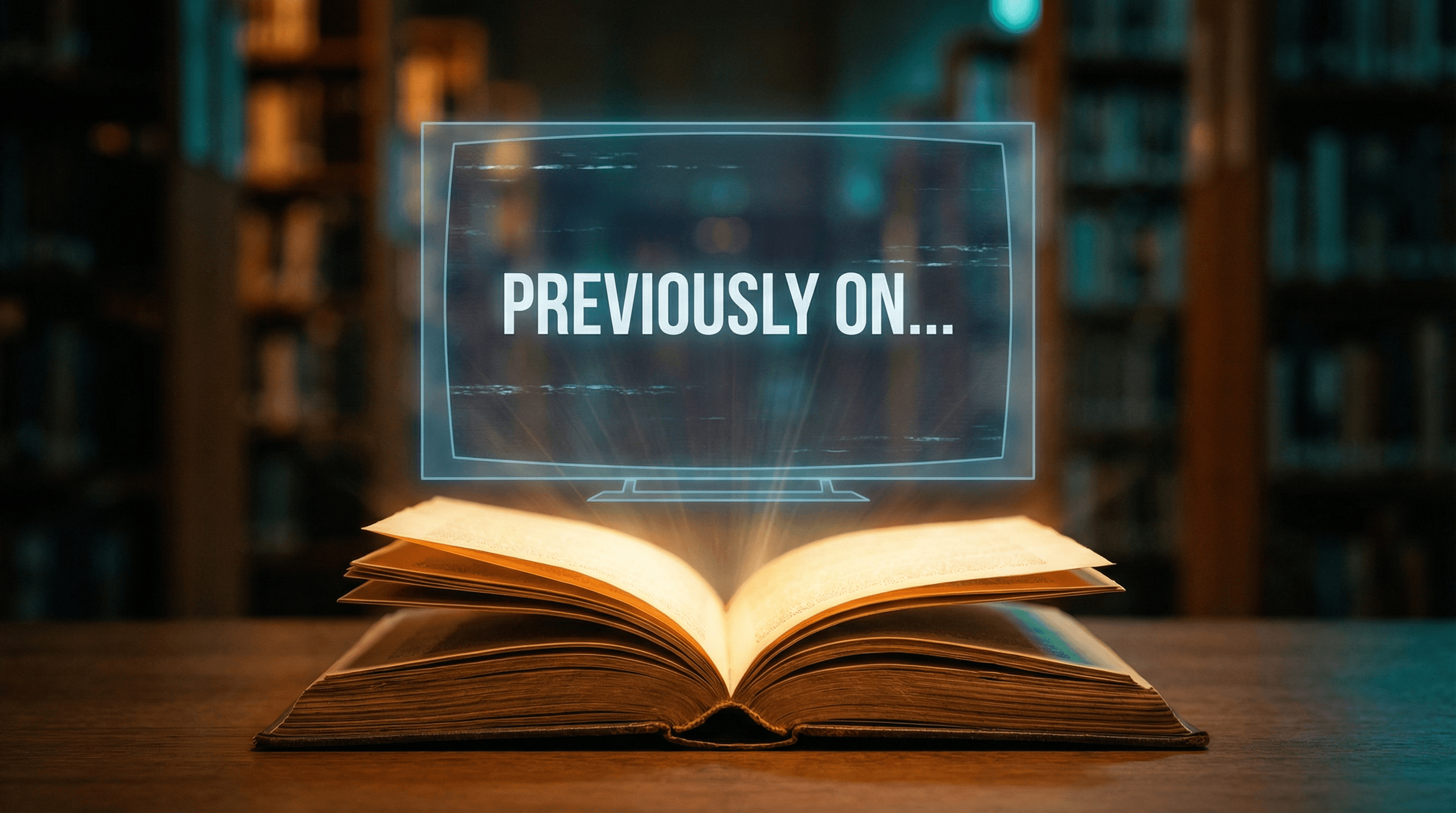
TV figured this out decades ago. Every episode opens with a quick recap. Here's what happened, here's who matters, here's where we left off. Thirty seconds and you're caught up.
Books don't have that. Some authors include recaps (and readers love them for it), but most don't. The longer the series, the worse the problem gets.
We posted about this on r/Fantasy, asking if anyone else wished books had "Previously On" recaps like TV shows. The response caught us off guard. Hundreds of upvotes. Nearly 200 comments. Actual published authors jumped into the thread.
It was clear this wasn't just our problem.
The constraint that shaped everything
When we started building BookPal, we had one rule: the AI can only know what you've read. Not one page more.
That single constraint shaped every feature.
Previously On... gives you TV-style recaps that grow with your reading progress. Key events labeled MAJOR and MINOR so you can pick up any book right where you left off.
Spoiler Shield Chat lets you ask "who is this character?" or "what happened at the ball?" and get answers pulled only from the text you've read so far. The AI genuinely doesn't know what comes next.
Snap and Sync bridges physical and digital. Reading a paperback? Take a photo of the page and BookPal finds your exact position. No manual tracking, no fumbling with sliders.
Session Insights surfaces themes, takeaways, and key moments from each reading session. Like an automatic reading journal that writes itself.
Built on your actual book
The key difference between BookPal and every other AI tool (ChatGPT, Kindle recaps, Google summaries) is architectural, not just a feature toggle.
Every answer comes from the actual text of your book, bounded by your reading position. Not training data. Not internet knowledge. Not hallucinated plot points that sound right but aren't.
Kindle's AI has read the entire book and tries to suppress future information. BookPal doesn't have access to content past your current page. That's not a content filter on top of full knowledge. It's a structural guarantee.
BookPal is grounded. It reads what you've read, nothing more. That's not a limitation. It's the whole point.
What's next
We're just getting started. BookPal is in the final stages of testing and currently under App Store review. It'll be available on iOS very soon. Android coming after that.
Join the waitlist to be the first to know when it launches, and get a 7-day free trial when it does.
Because reading should feel like reading, not like studying for an exam.